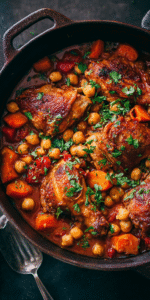

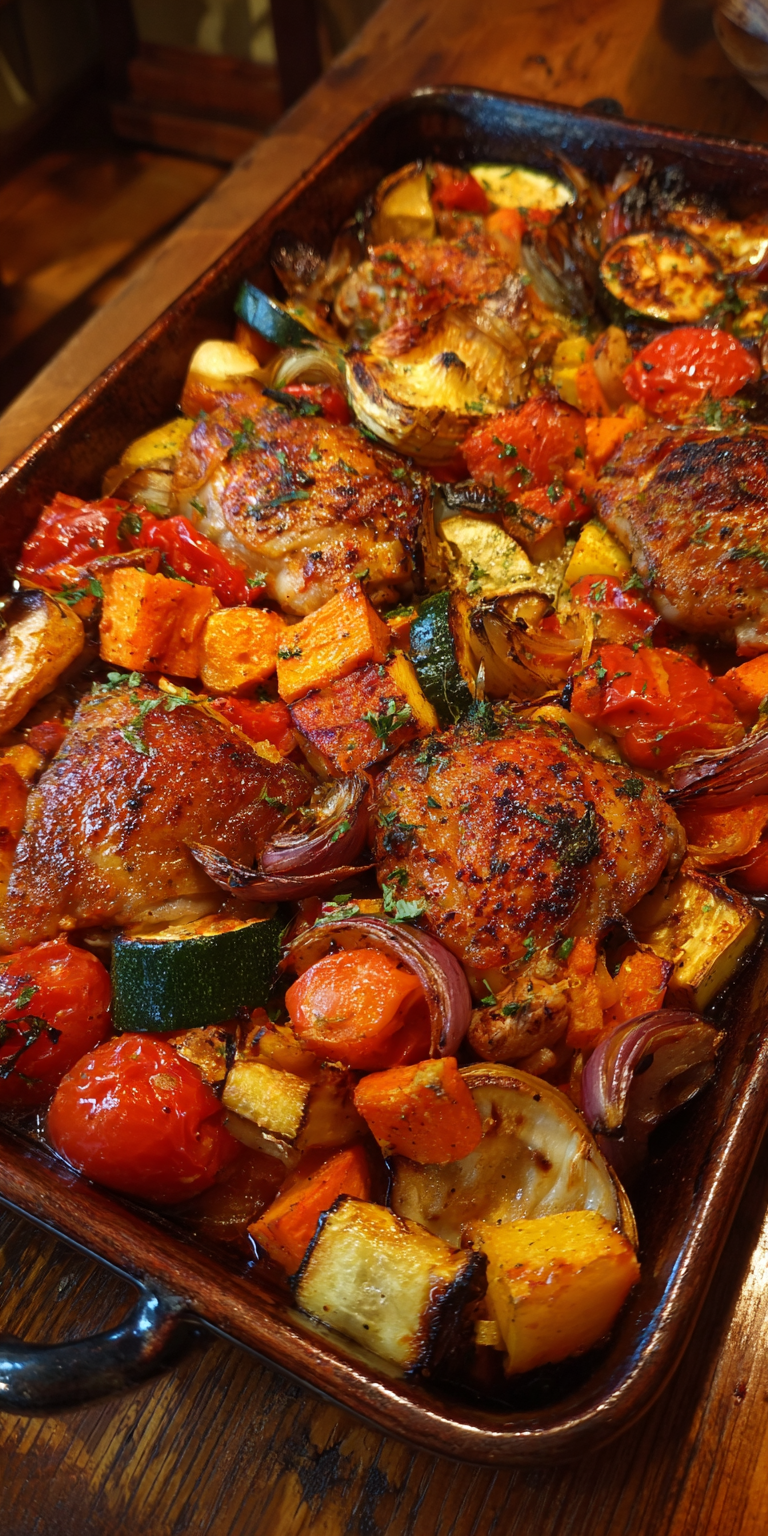
You’ve roasted chicken thighs before. You’ve tossed vegetables in harissa. But you’ve never made them like this. I’m about to show you the one secret that changes everything for this Roasted Vegetable & Harissa Chicken Thighs. If you love easy, flavorful chicken dinners, you should also try my Honey Garlic Lemon Pepper Chicken Thighs.
This isn’t just another sheet pan dinner. It’s a masterclass in texture and flavor layering. The kind of meal that makes you look like a kitchen genius with shockingly little effort.
Ready to find out what makes my version different? Let’s get into it.
Recipe Overview
Here’s the quick snapshot of what we’re making today.
- Cuisine: Modern Fusion
- Category: Main Course
- Prep Time: 15 minutes
- Cook Time: 35 minutes
- Total Time: 50 minutes
- Servings: 4
The Secret Ingredient That Makes All the Difference
Most recipes stop at harissa paste. We’re going further. The real game-changer is preserved lemon.
Roasted Vegetable & Harissa Chicken Thighs Recipe

The “Upgraded” Ingredient List
The Pro-Method (Step-by-Step)
Notes
Enjoy your homemade Roasted Vegetable & Harissa Chicken Thighs Recipe!
Nutrition Information
That bright, funky, intensely salty-citrus punch cuts through the rich chicken fat and smoky spices. It doesn’t just add flavor; it wakes up every other ingredient on the pan. You’ll use it in the marinade and as a finishing garnish.
If you can’t find it, a quick zest and juice of a regular lemon with a pinch of sea salt is a decent stand-in. But trust me, seek out the preserved kind. It’s a pro staple for a reason.
Why This Method is Better (My Pro-Tips)
I don’t just throw everything on a pan and hope for the best. Timing and treatment are everything.
First, we start the chicken skin-side down in a cold pan. This slowly renders the fat, giving us crackling-crisp skin without burning. Second, we roast the vegetables on a separate tray. Crowding is the enemy of caramelization.
This two-pan trick is the difference between steamed veggies and ones with serious, flavorful char. It’s the only way I do my oven roasted meals like this Garlic Herb Butter Roasted Chicken and Veggies now.
The “Upgraded” Ingredient List
Quality in, flavor out. Here’s exactly what you need.
- 4-6 bone-in, skin-on chicken thighs
- 3 tbsp harissa paste (divided)
- 2 tbsp olive oil
- 1 tbsp finely minced preserved lemon rind (plus more for garnish)
- 2 tsp smoked paprika
- 1 tsp ground cumin
- 3 cloves garlic, minced
- 1 large red onion, cut into wedges
- 2 bell peppers (any color), sliced
- 1 medium zucchini, chopped
- 1 lb baby potatoes, halved
- Salt and black pepper
- Fresh cilantro or parsley, for serving
The Pro-Method (Step-by-Step)
Follow these steps closely. This is where the magic happens.
- Pat your chicken thighs completely dry. This is non-negotiable for crisp skin. Place them skin-side down in a large, cold oven-safe skillet or on a rimmed baking sheet.
- In a bowl, mix 2 tbsp harissa paste, 1 tbsp olive oil, the preserved lemon, smoked paprika, cumin, garlic, 1 tsp salt, and ½ tsp pepper. Rub this mix all over the chicken (except the skin side currently on the pan).
- Place the chicken skillet and a separate, large baking sheet for the veggies into a cold oven. Then set the oven to 425°F (220°C). This slow start renders the fat perfectly.
- Toss all your chopped vegetables and potatoes with the remaining 1 tbsp harissa and 1 tbsp olive oil. Season well with salt and pepper.
- Once the oven reaches temperature, carefully pull out the veggie tray. Spread the vegetables in a single layer. Flip the chicken thighs in the skillet so they are now skin-side up.
- Roast everything for 30-35 minutes. The chicken skin should be deep golden and crisp, and the vegetables should have dark, roasted edges.
- Let the chicken rest for 5 minutes. Garnish everything with fresh herbs and an extra sprinkle of minced preserved lemon rind before serving.
Common Mistakes & How to Fix Them
Even great cooks can run into these issues. Here’s how to avoid them.
Soggy Chicken Skin: This means you didn’t start in a cold pan or didn’t dry the skin thoroughly. Moisture is the enemy of crisp. Always pat dry and use my cold-start method.
Bland or Burnt Harissa: Harissa paste brands vary wildly in heat and salt. Always taste it first. If it’s burning, your oven is too hot, or you didn’t mix it with enough oil. The oil acts as a protective barrier.
Undercooked, Overcooked Veggies: Cutting vegetables to uniform size is key. If some pieces are done early, just pull them off the tray. The potatoes and onions can handle more time.
Variations for the Adventurous Cook
Mastered the base recipe? Try these pro swaps.
Swap the potatoes for cubed sweet potato or parsnips. Their sweetness plays beautifully with the harissa’s smoke. For a richer sauce, deglaze the chicken skillet with a splash of white wine or chicken broth after cooking and simmer for a minute.
Love heat? Add a teaspoon of ground Aleppo pepper or chipotle powder to the harissa rub. Want it creamier? Serve with a dollop of cool, full-fat Greek yogurt or labneh on the side.
Nutrition Notes
This is a balanced, protein-packed meal. Here’s a rough breakdown per serving.
- Calories: ~520
- Protein: 35g
- Fat: 28g (mostly healthy, unsaturated from olive oil & chicken)
- Carbohydrates: 30g
- Fiber: 6g
Your Pro-Level Questions Answered
These are the questions I get from cooks who want to level up.
Can I use boneless, skinless chicken thighs?
You can, but you’ll lose the textural contrast of the crisp skin. If you do, skip the cold-start step. Just roast them on the sheet pan with the veggies, but check for doneness 5-10 minutes earlier as they cook faster.
My harissa is very oily. Is that okay?
Absolutely. In fact, it’s often better. Just pour off a little of the excess oil from the top before you measure your tablespoons. The paste underneath will be more concentrated and flavorful.
How do I get my potatoes crispier?
Give them a head start. Toss the potato halves in oil and salt and roast them alone for 15 minutes before adding the other vegetables. This guarantees a perfect, crispy exterior every single time.
A Few Final Secrets
This recipe is your new weeknight secret weapon. It feels special but works on a regular Tuesday. The preserved lemon is the key you didn’t know you were missing.
Remember, the best savory chicken recipes are about confidence. Trust the process, use high heat, and don’t be afraid of that dark, delicious char on your vegetables. That’s where the flavor lives. For another fantastic sweet and savory chicken option, my Sweet BBQ Pineapple Chicken Thighs are always a hit.
Now that you have the secrets, I want to hear from you. Make this, taste it, and tell me: was the preserved lemon the game-changer I promised? Leave your thoughts and your own tips in the comments below—let’s keep the kitchen conversation going!